A winter panorama from the air
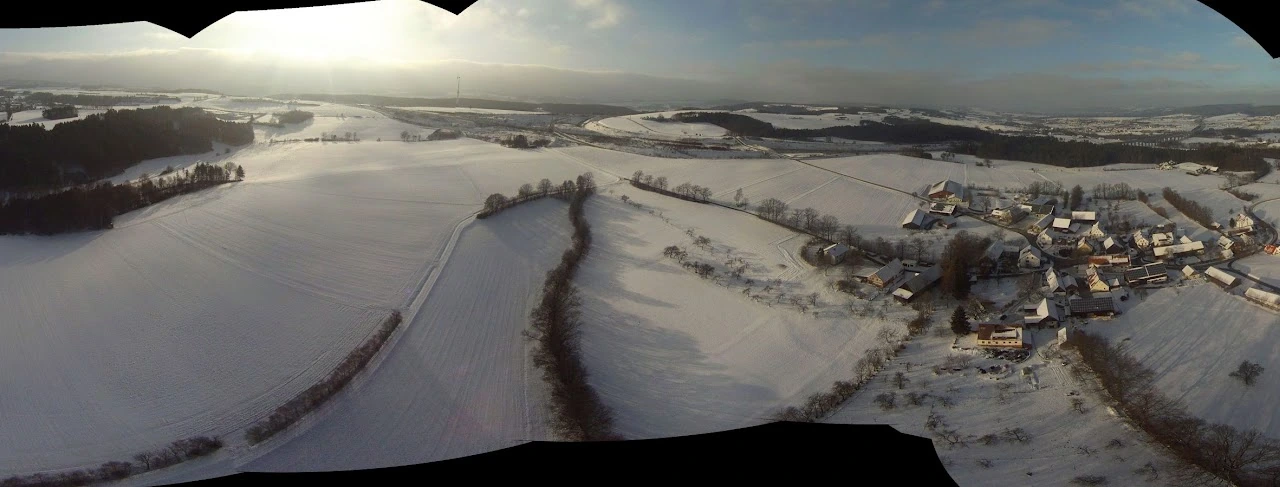
I captured this panorama in winter 2010, using a GoPro HD Hero on my home-built hexacopter. Alongside 1080p video, the camera could take a 5-megapixel photograph every two seconds. Its lens covered about 170°. I cropped the image edges before stitching in PTGui.
My home-built MikroKopter
The build is based on the MikroKopter HexaKopter. The original wiki describes the system and provides technical documentation.
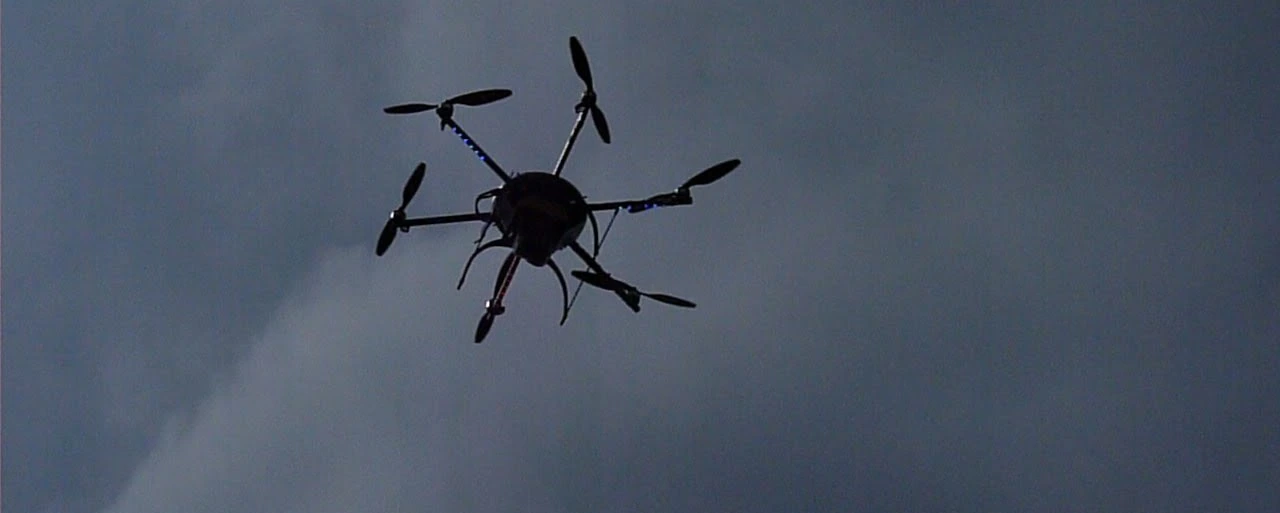
The build combined photography with technical experimentation. The camera hung beneath the frame. A useful viewpoint was only part of the challenge: motor vibration could visibly distort the images.
Vibration and the jello effect
A CMOS sensor reads the image sequentially. If vibration changes the camera’s orientation during readout, the result can have wave-like distortion: the jello effect. I isolated the camera from the frame using a soft, viscously damping sponge. Tape limited swinging, while well-balanced propellers reduced vibration at its source.
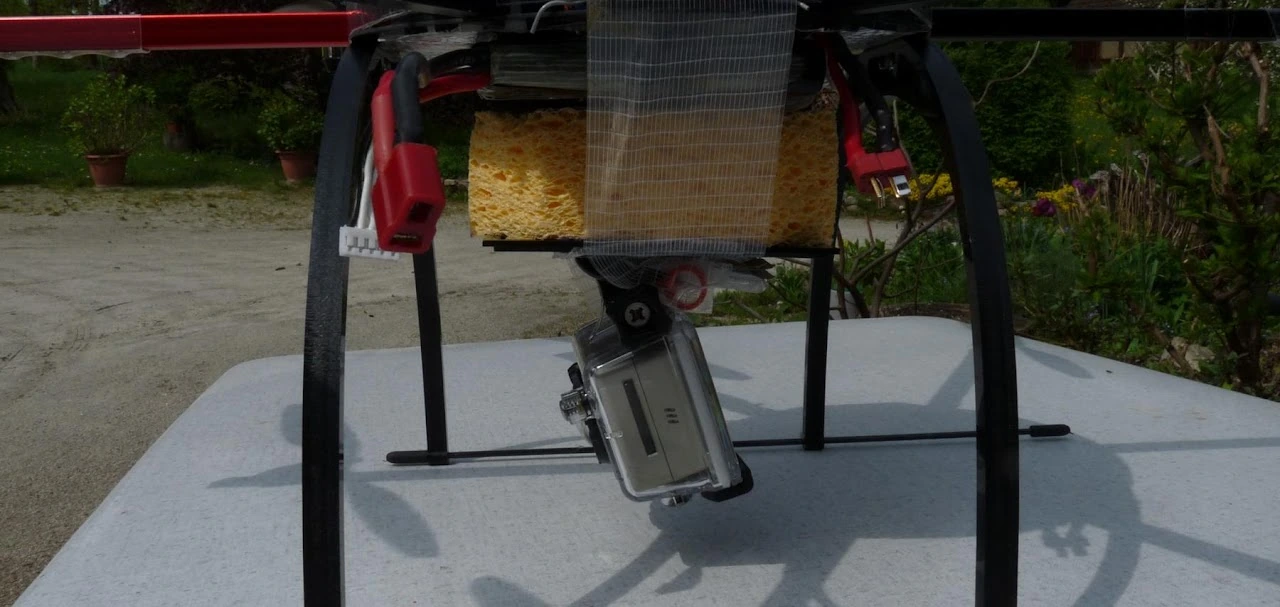
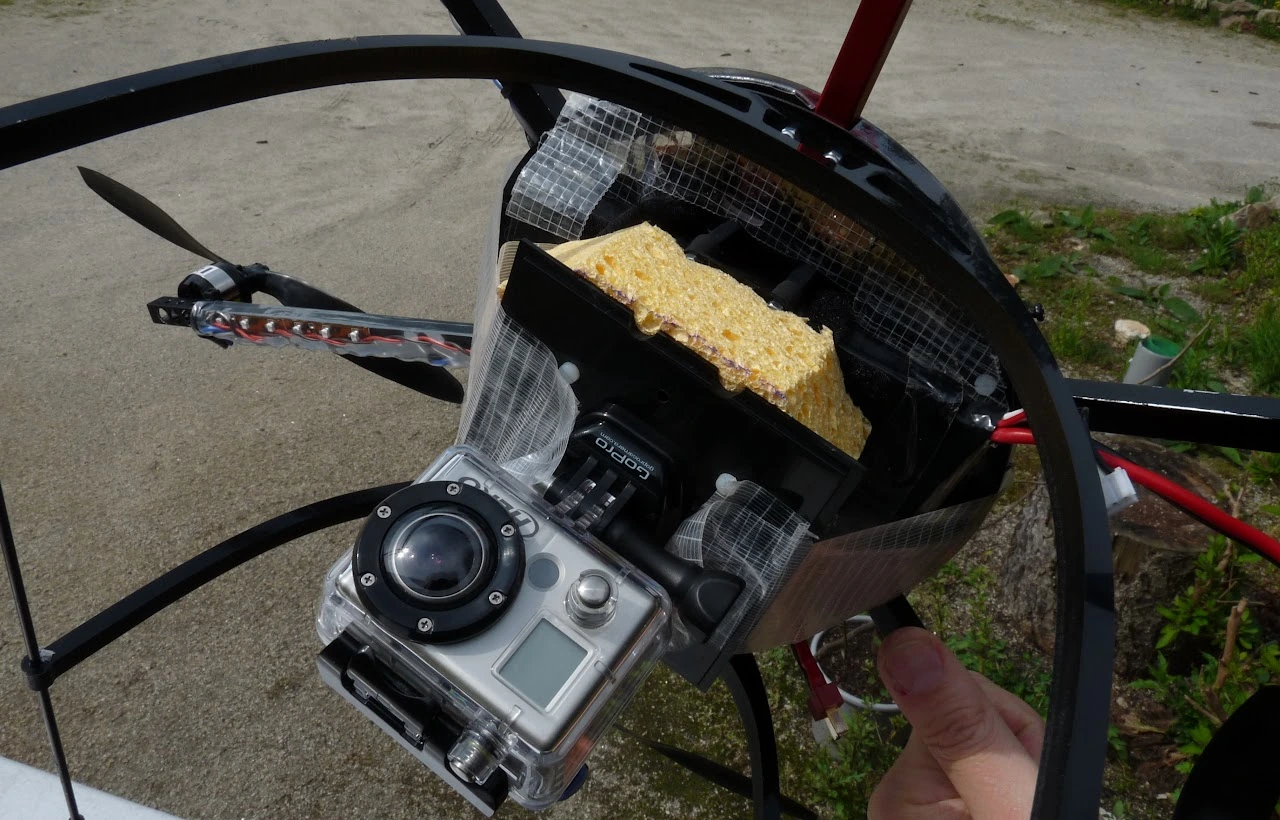
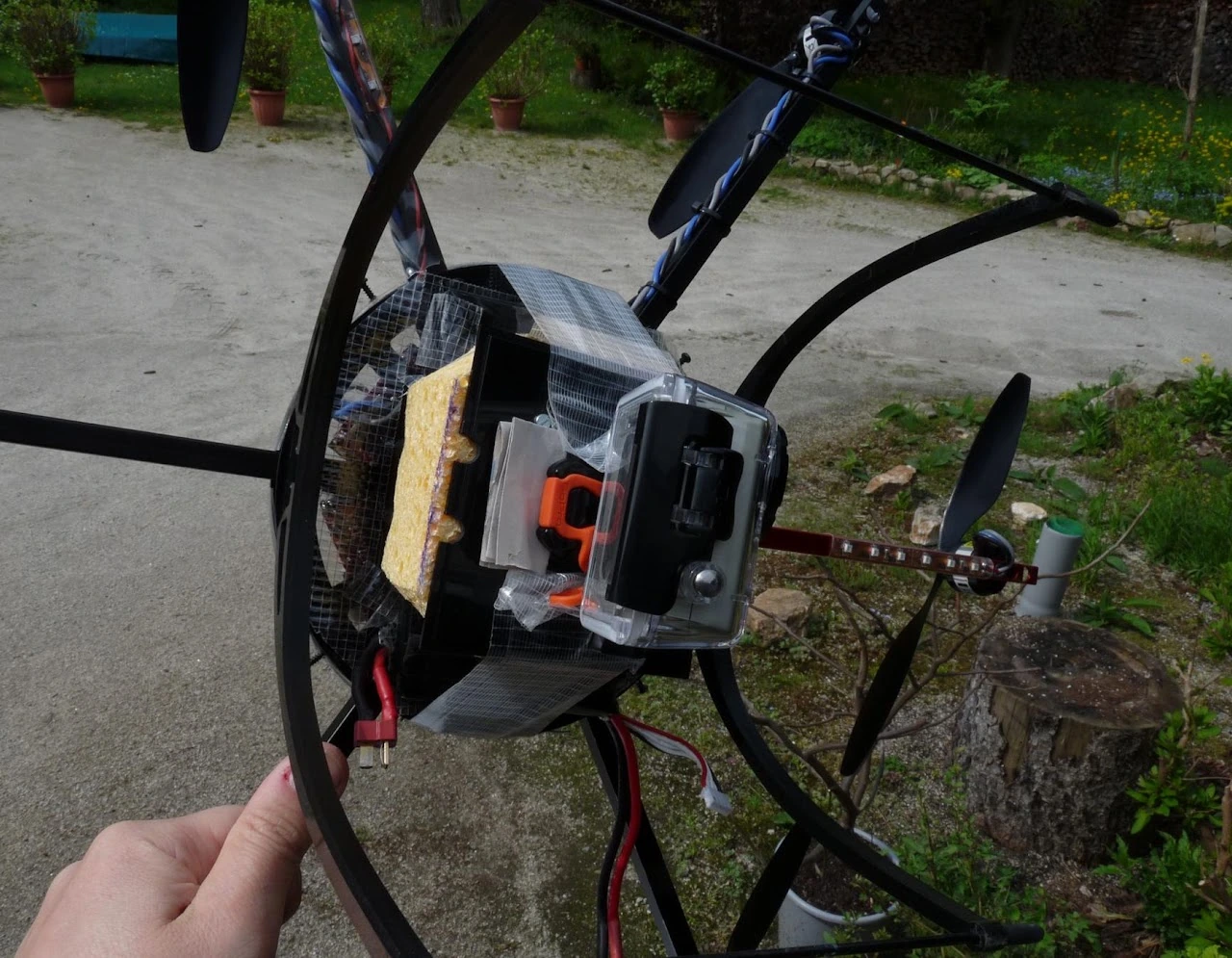
I noticed less visible jello in low light. Neutral-density filters were one approach discussed at the time: longer individual exposures can average high-frequency vibration into blur rather than sharply defined waves. That does not fundamentally eliminate rolling shutter, and it can add motion blur. Exposure time and sequential readout duration are different. My original observation was not a systematic filter comparison.
Lessons from the build
Reducing vibration at its source and isolating the camera mechanically helped more than simply hoping to fix everything in software. Camera balance, vibration and settling before exposure also matter on my panorama head.